01
The last promise was sincere
You meant it in the morning.
The bottles went out. The number was deleted. The vow was made with the hard clarity that follows a night you cannot defend. You would stop. No ceremony, no excuses, no asking strangers in folding chairs for help. You would finally become the person whose will could overpower the thing.
Then the cue arrived: pain, payday, loneliness, a familiar street, the nervous system lighting up before the argument had even begun. By night, the promise had become evidence for the prosecution. Weak. Dishonest. Hopeless.
Or maybe you are watching this happen to someone you love. You have heard the apology, paid the bill, administered naloxone, changed the lock, believed and stopped believing. Compassion and anger now live in the same exhausted body.
Addiction attracts two brutally simple stories. One says it is nothing but bad choice: stop making it. The other says it is nothing but disease: choice has disappeared. Neither is adequate to the whole person.
The clinical picture is more complex. So is the Catholic one. Addiction can seriously constrain freedom without erasing human dignity or every form of agency. Treatment can be necessary. Responsibility can remain real while culpability varies. Grace is essential in Catholic life—and grace is not a spiritual substitute for medicine, therapy, or recovery support.
Grace does not flatter your willpower. It tells the truth: you are wounded, responsible in ways only God can fully judge, helpable, and not alone.
02
The strongest objections come from opposite sides
One objection says the medical model lets people off the hook. If addiction is a disease, why expect honesty, restitution, boundaries, or change? Families know too well that a diagnosis does not make manipulation harmless.
The opposite objection says moral and religious language adds shame to a health condition. Talk about sin or confession can make people hide, avoid care, or interpret relapse as proof that God is finished with them. History supplies enough examples of communities praying over a crisis while competent treatment waited outside.
Both objections identify a real danger.
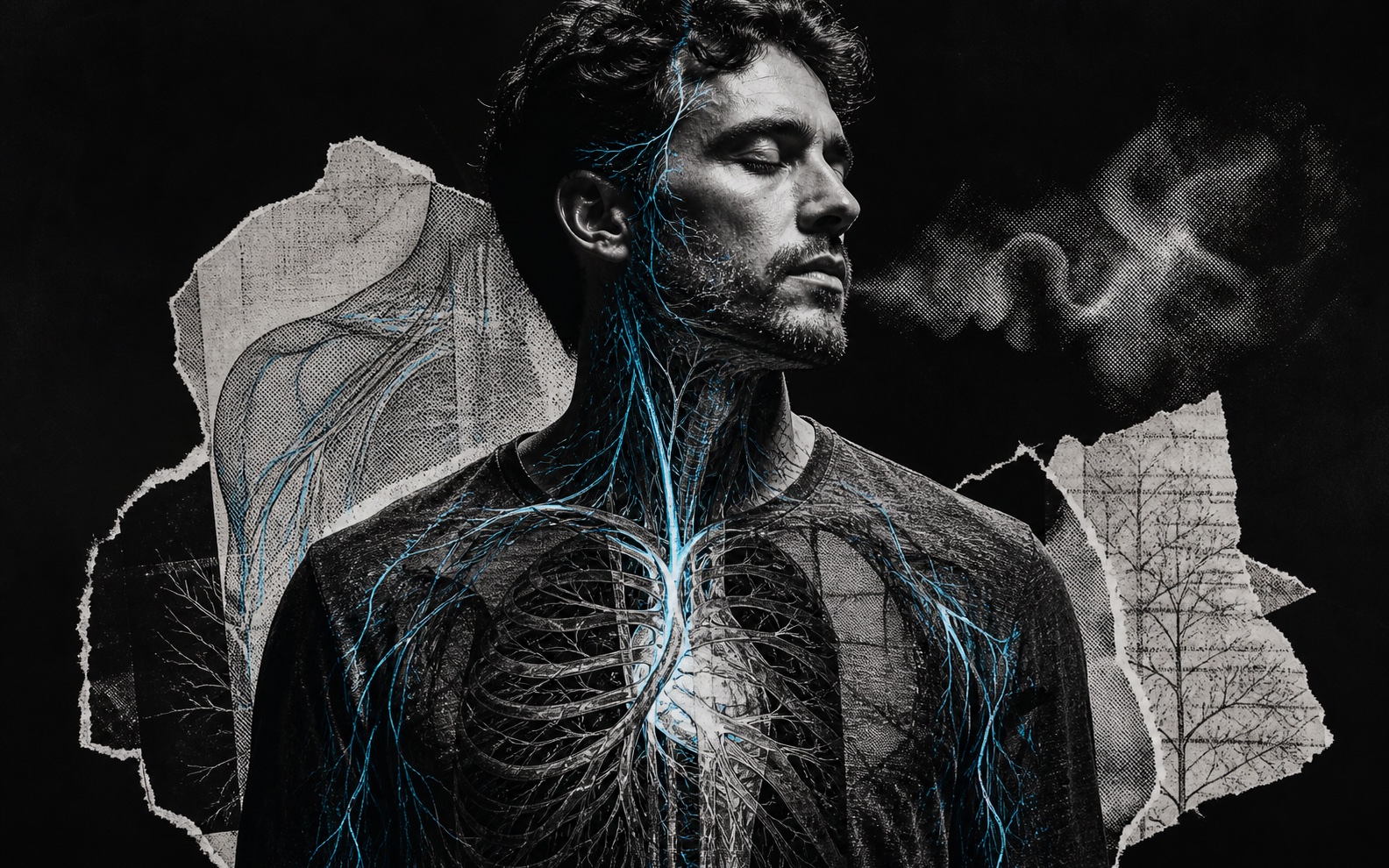
A person with a substance use disorder is not merely a passive location where chemistry happens. Recovery can involve choices, practices, truth-telling, repair, and responsibility. But the ability to choose is not an on/off switch. Repeated substance use can alter reward, stress, learning, judgment, and behavioral control. Genetics, environment, trauma, mental illness, social conditions, and exposure all matter. Shame does not reverse those processes.
Catholic moral theology has conceptual room for this complexity. It distinguishes the objective character of an act from a person’s degree of responsibility. The Catechism states that fear, habit, inordinate attachment, and psychological or social factors can diminish or even remove imputability in particular cases. That is not a blank check, and outsiders cannot calculate another person’s soul from a distance. It is a warning against both denial and self-righteous certainty.
03
Define the words before they become weapons
The American Society of Addiction Medicine defines addiction as a treatable chronic medical disease involving complex interactions among brain circuits, genetics, environment, and life experience. The National Institute on Drug Abuse likewise describes addiction as a chronic disorder involving compulsive use despite harmful consequences.
“Chronic” does not mean untreatable, continuously symptomatic, or morally irrelevant. It signals that recurrence risk and continuing management may be part of care. “Disease” does not mean the person is a machine. “Choice” does not mean every choice is equally unencumbered.
Recovery is broader than abstinence alone. For different people it may include reduced or ended use, medication, physical safety, stable housing, restored relationships, management of co-occurring conditions, mutual-help participation, and a rebuilt life. The appropriate goals and methods require qualified clinical judgment and the person’s circumstances.
04
What good treatment actually looks like
There is no single recovery costume.
Evidence-based care can include behavioral therapies, medications, medical management, peer recovery support, mutual-help groups, harm-reduction services, and treatment for co-occurring mental illness. For alcohol use disorder, the National Institute on Alcohol Abuse and Alcoholism describes FDA-approved medications and behavioral care, often combined according to individual need. Other substance disorders have different evidence bases; a finding about alcohol cannot simply be pasted onto opioids, stimulants, or everything else.
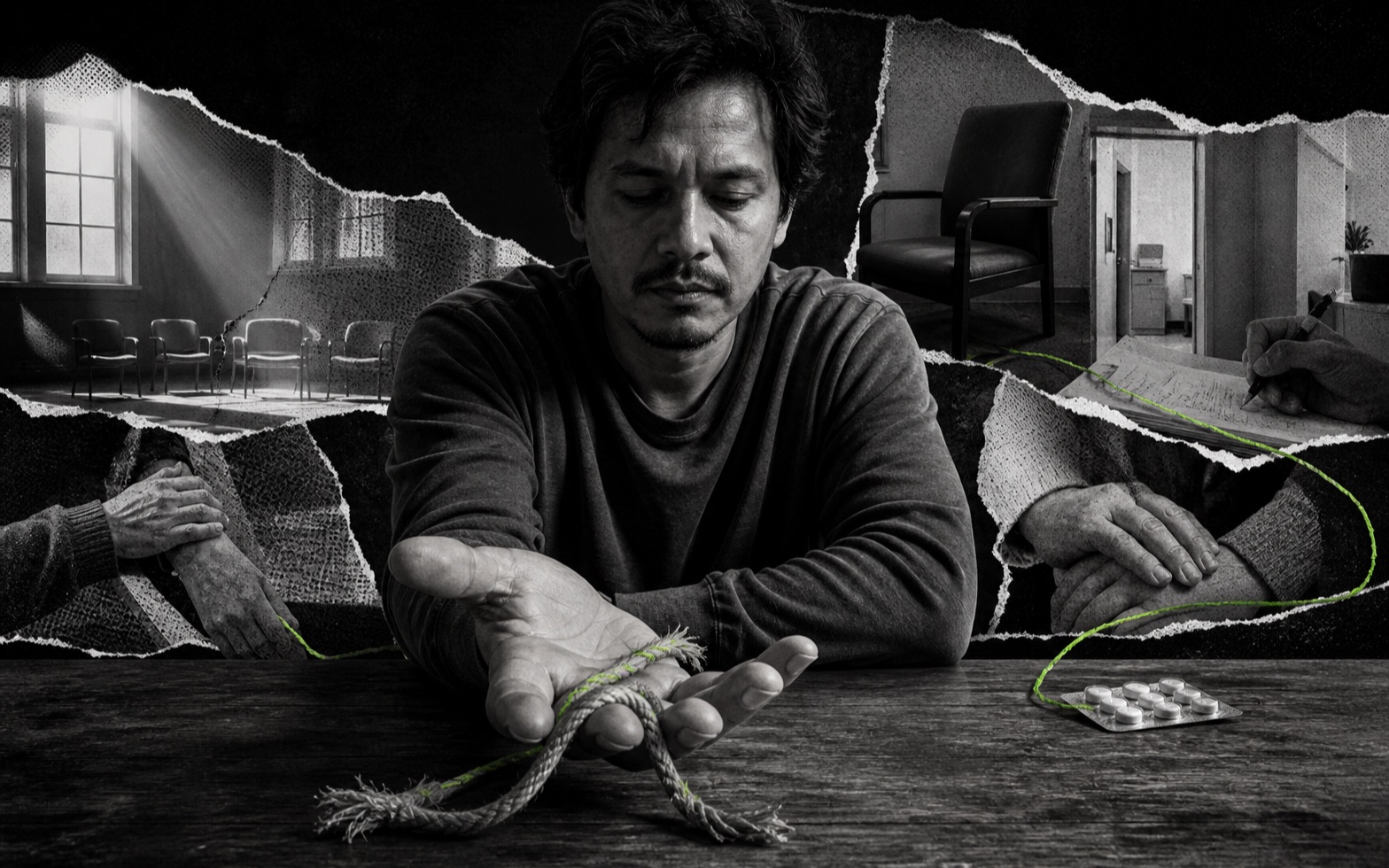
Some people benefit deeply from Twelve-Step spirituality. Others need a secular mutual-help option. Medication can be lifesaving and is not evidence of inferior recovery. A residential program may fit one person and be unnecessary or inaccessible for another. Family boundaries can be loving. So can carrying naloxone.
The evidence has limits. Population studies cannot predict one person’s path. Treatment quality varies. Relapse can occur and may indicate that care needs adjustment; it is not proof that treatment is pointless, nor is it harmless. Spiritual practices are difficult to isolate from community, expectation, behavior, and other care. Anyone promising one universal cure—clinical, spiritual, commercial, or ideological—is offering confidence beyond the data.
This article cannot diagnose a substance use disorder or prescribe a treatment plan. A clinician with addiction expertise can assess risk, withdrawal, co-occurring conditions, medication options, and level of care.
05
What grace is—and what it absolutely is not
In Catholic teaching, grace is God’s free and undeserved help, his own life given to heal and elevate human beings. It is not positive thinking with stained glass. It is not a hidden reserve of grit for people who prayed correctly. It is not a guarantee that craving disappears after confession or Communion.
The Sacrament of Reconciliation can restore communion with God; sacramental life, prayer, and a trustworthy parish community can strengthen hope and nourish conversion. They never replace detoxification, medical assessment, medication, psychotherapy, residential or outpatient care, peer support, emergency intervention, or any other indicated treatment. A priest is not automatically an addiction clinician. An addiction clinician is not automatically a confessor. A person may need both, and the two should not compete.
The Church also calls intoxication and drug abuse morally serious because they can injure the person and others. But moral seriousness is not permission for contempt. The person is never reducible to the worst episode, the substances used, or the damage done. Dignity survives even when trust does not. Forgiveness does not eliminate consequences, and mercy does not require a family to finance continued harm or abandon safety.
Grace opposes despair in two directions. It refuses the fantasy “I can save myself if I squeeze harder.” It also refuses “I am only my disorder, so nothing I do matters.” Catholic hope is neither self-sufficiency nor passivity. It is consenting to help—divine and human—and practicing freedom where freedom is presently possible.
06
A next step small enough to take today
If this is your struggle, the next honest step may be smaller than a lifetime promise. Tell one safe person the unedited truth. Contact a qualified treatment provider. Ask specifically about assessment, medications where appropriate, therapy, peer support, and co-occurring mental-health care. The U.S. Substance Abuse and Mental Health Services Administration offers FindTreatment.gov and a 24-hour helpline at 1-800-662-HELP (4357).
If there is an immediate danger or suspected overdose in the United States, call 911. If you or someone else is in suicidal or mental-health crisis, call or text 988. Emergency action is not a referendum on anyone’s character.
If you love someone with addiction, you also deserve competent support. You cannot force another person’s recovery, and love does not demand that you make danger easy. Ask a clinician or reputable family-support service for help setting boundaries and planning for emergencies.
If you are Catholic-curious, you can make one low-pressure experiment: walk into a church when no service is happening, sit for ten minutes, and say exactly what is true—even if the only prayer available is, “I cannot do this alone.” Then walk out and make the clinical call. The prayer does not replace the call. It may be the act that helps you stop pretending you do not need it.
Sources
Read further
The argument above is our own. These primary and reputable sources are here so you can inspect the evidence yourself.
- National Institute on Drug Abuse, Drugs, Brains, and Behavior: The Science of Addiction.
- American Society of Addiction Medicine, Definition of Addiction.
- National Institute on Alcohol Abuse and Alcoholism, Recommend Evidence-Based Treatment: Know the Options.
- Substance Abuse and Mental Health Services Administration, Find Substance Use Disorder Treatment.
- Catechism of the Catholic Church, Freedom and Responsibility, §§1730–1738.
- Catechism of the Catholic Church, Respect for Health, §§2288–2291.
- Catechism of the Catholic Church, Grace, §§1996–2005.
- Catechism of the Catholic Church, The Sacrament of Penance and Reconciliation, §§1422–1424.